The Right to Live in the Community

When parents formed our chapter of The Arc in 1961, options were limited for their children with intellectual and developmental disabilities (IDD). Living, working, and receiving support in the community felt far out of reach. Instead, many children with IDD were cut off from the community—committed by their families into state homes for people with disabilities, like the Arvada-based Colorado State Home and Training School (the Ridge Home), which swelled to capacity and kept a long waiting list. In the meantime, families who kept their children at home faced a lack of support—from local schools that refused to enroll their children and from employers who would not employ them.
The parents at The Arc knew that people with IDD deserved more, and they set out to change things, one step at a time. They drew up recommendations and petitioned the Jefferson County School District to launch an educational program for children with moderate to severe IDD, finding success in 1961. They raised funding for the purchasing of homes in the community, which served as group homes for people with IDD. They initiated research and planning to establish sheltered workshops for people with IDD—segregated work settings that would eventually pave the way for more equitable employment models, but were groundbreaking at the time. Piece by piece, our chapter was doing the work to establish educational, residential, and employment options that had never been available before.
And supports like these were changing lives.
David Lopez moved into a group home in Colorado in 1978. Before then, David, who had Down syndrome, lived in a New Jersey-based institution—but his brother, Jack, saw that David could achieve so much more if he had access to the community. Jack recalls:
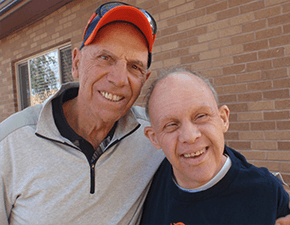
“David’s quality of life just blossomed and expanded within the community. He learned job skills. He learned transportation. He learned safety. Social skills, dating, going on trips—it goes on and on. He felt part of the community. I think the community felt that David Lopez was part of their setting, as a neighbor, as a friend, as someone that they actually could call upon if they needed him to help.”
As new supports continued to emerge, our chapter of The Arc worked hard to share the news—sending letters, knocking on doors, and meeting with professionals to spread the word. And at the same time, chapters of The Arc and other organizations nationwide were making great strides. Through their advocacy, laws like the Rehabilitation Act of 1973 and the Americans with Disabilities Act of 1990 were outlawing discrimination against people with disabilities in many sectors of the community, like schools, workplaces, and transportation systems. Slowly but surely, equal access to public life was becoming the new legal standard.
The Ridge Home in Arvada closed in 1991. In the years since, The Arc-JCCGC’s work has centered on expanding options for people with IDD and protecting the progress that has already been made. Whether it’s guiding individuals to access life-changing supports or defending the funding that makes life in the community possible for many, our work has never stopped—and never will.