The Right to Wellbeing
Today, part of our work centers on preserving access to Home and Community-Based Services (HCBS)—Medicaid-funded programs that help people with disabilities receive care and support in the community, as opposed to in an institutional setting. This work is nothing new for our chapter. As early as the 2000s, The Arc-JCCGC was educating elected officials and voters on the importance of adequately funding these programs.
The HCBS waiver program got its start in 1981, and in the years that followed, access to these services made independence possible for many. But at the same time, a combination of factors, such as growing demand, led to long waitlists for services in multiple states, including ours. Here in Colorado, an added challenge was thrown into the mix when voters passed the Taxpayer’s Bill of Rights (TABOR) in 1992, restricting government spending at the state level.
With waitlists growing, Colorado’s Arc chapters, including The Arc-JCCGC, were working to find solutions. Like any movement, however, the fight to protect services was not without its hurdles. In the mid-2000s, chapters of The Arc like ours financially supported plaintiffs in a class action lawsuit against the state of Colorado, claiming that the state was failing to provide residential services to thousands of qualified individuals. However, the judicial system ultimately found in favor of the state, allowing yearslong waits for services to continue. In 2008, chapters’ efforts to promote Amendment 51, a ballot measure that would help eliminate waiting lists through a tax increase, was also unsuccessful.
Even so, the disability community continued to speak out—and in the mid-2010s, we saw the beginnings of progress. In response to the disability community’s concerns, Colorado eliminated waiting lists for the Supported Living Services and Children’s Extensive Support waivers—two HCBS waivers serving people with IDD.
As of 2026, the only HCBS waiver with an active waiting list is the Developmental Disabilities waiver, or DD waiver; even so, the fight to protect access to services is far from over. The impact of the DD waiver waitlist is seismic for many. Individuals who are eligible for the waiver stay on the list an average of eight years before being enrolled—and the problem is only worsening. Modern-day barriers to HCBS funding, including state budget challenges and massive cuts to Medicaid that became law in 2025, have prompted changes that will effectively double the DD waiver waitlist. This is just one of many ways in which our community has been impacted by these challenges, making our work to protect HCBS as important as ever.
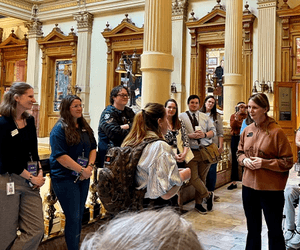
That’s why, over the past two years, our chapter has made its voice heard in Colorado and D.C., rallying others to do the same. Though our community has been hard-hit by cuts, state legislators have also made impactful, constructive decisions after hearing testimony directly from our community members—individuals like Molly Kirkham, a self-advocate and board member at The Arc-JCCGC. Kirkham shares:
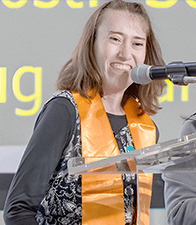
“Our chapter has been very vocal about the necessity and the need. A lot of people think of services as just optional, but they really allow people to be independent and safe. For example, it helps them get housing, learn independence skills, and get to doctor’s appointments. It’s the lifeline we have.”