Peer Power: Bringing Advocacy Directly to the Community
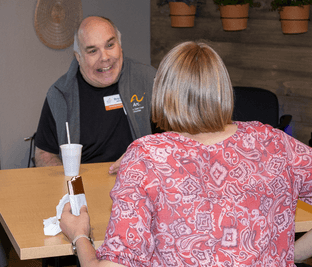
Our newest program, Peer Power, has been making its way around Jeffco—to a coffee shop, an independent living community and soon, even more locations. As Consulting Advocate Brent Belisle put it: “We’re taking this show on the road!”
Peer Power is a consulting advocacy program, which means that at Peer Power events, people with intellectual and developmental disabilities (IDD) receive support from advocates who also have IDD. Each event is held at a different location in the community, which is an important characteristic of the program, said Self-Advocacy Program Coordinator Helen Pietranczyk.
“We’re not asking people to come to us. We’re coming to you,” she explained.
Depending on the location, size of the group, and more, each iteration of Peer Power may look slightly different, but the main idea is always the same: Providing Q&A-based advocacy support from someone with lived experience. Participants in Peer Power can ask a consulting advocate about anything that’s on their mind, as opposed to being limited to specific questions or topics.
Our team most recently brought Peer Power to Trailhead Community, an independent living community in Littleton, where Belisle supported residents with questions about transportation, accommodations, and job readiness skills. One individual, for instance, had a question about paratransit services. Having applied to use RTD’s Access-a-Ride service, she had never heard back on her application and was unsure what to do next. Belisle outlined what steps the resident should take to contact the agency about her application.
“Peer Power is a great opening for people to learn more independent living skills and advocacy skills,” Belisle described.
Additionally, Peer Power is also a chance for participants to learn more about The Arc-JCC&GC and connect with an Arc advocate if they would like further advocacy support.
In the coming months, the Peer Power team looks forward to visiting several more locations, bringing this valuable form of support to even more community members.
“It makes the individual feel more comfortable when they talk to someone with lived experience,” said Belisle. “I put the individuals at ease. They can talk to me more freely and openly.”